
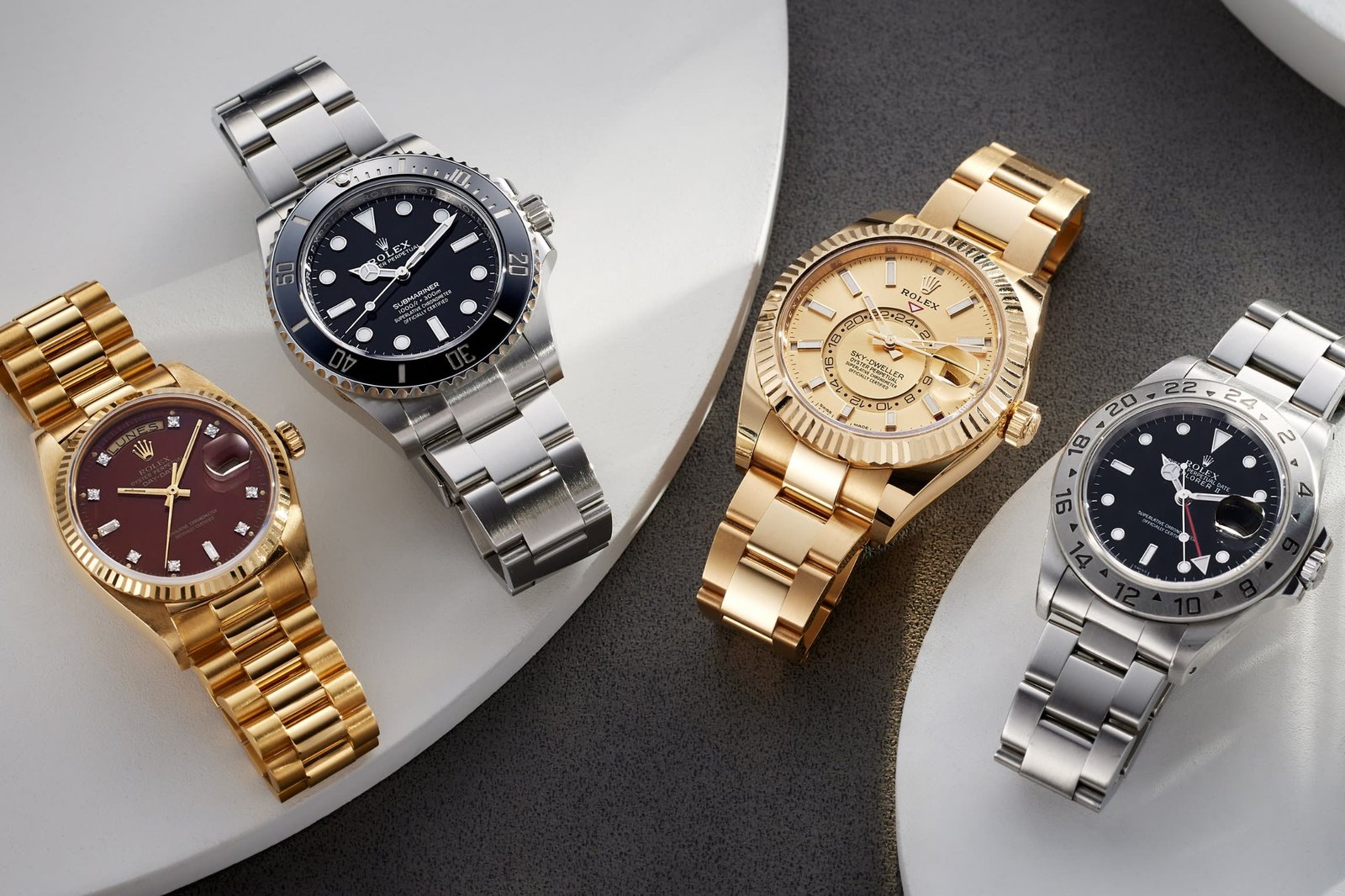
Rolex: Luxury Watch Brand from Switzerland
Last Updated on September 19, 2026
Rolex: Luxury Watch Brand from Switzerland builds mechanical wristwatches that run purely on spring tension rather than batteries. Your arm swings, spinning a metal weight inside the case that tightens a coiled mainspring. That spring gently pushes tiny gears forward. A balance wheel rocks back and forth eight times every second to slice that push into equal beats. Hands pinned to the gears sweep smoothly across the dial, telling the time without any electronics.
Inside the luxury watch movement
| Part or input | What it does | What you notice when it goes wrong |
|---|---|---|
| Perpetual rotor | Swings on an axle to wind spring | Watch stops overnight despite daily wear |
| Mainspring | Stores mechanical energy in a barrel | Watch won’t wind or run |
| Escapement wheel | Releases power in controlled bursts | Watch races fast or halts completely |
| Balance wheel | Beats back and forth to keep time | Watch gains or loses several minutes |
| Oyster case | Seals out water, dust, and sweat | Fog or droplets under the crystal |
| Screw-down crown | Sets hands and winds manual power | Moisture leaks inside movement instantly |
What happens, step by step
- Natural wrist motion spins the half-moon perpetual rotor around its central pivot, swinging back and forth in both directions whenever you move your arm.
- Reversing gears convert those back-and-forth rotor swings into one continuous winding direction, sending power into the mainspring barrel every few seconds.
- The coiled spring inside the barrel tightens firmly, storing up to 70 hours of reserve power on modern automatic calibers like the 3235.
- The barrel slowly turns the gear train, which passes the stored mechanical force through four progressively smaller wheels in fractions of a second.
- The escape wheel taps the pallet fork eight times per second, arresting and releasing the gear train’s forward pressure in microscopic increments.
- The balance wheel and hairspring oscillate back and forth at 28,800 beats per hour, converting uncontrolled spring tension into exact fractions of time.
- Connected center pinions drive the hour, minute, and second hands forward around the dial face with an unbroken, sweeping glide.
Why this matters when something goes wrong
A mechanical movement relies entirely on physical balance, so any sudden drop or bump knocks the regulation off. When a watch gains several minutes per day, the delicate hairspring is often magnetized or tangled, causing it to bounce too quickly. If it stops running while on your wrist, the winding rotor axle has worn down or the mainspring has snapped from age.
Water inside the case causes fast, permanent damage. If the crown threads cross or loosen, moisture enters through the tube. You can read the official maintenance standards on the Rolex servicing procedure page, which requires pressure testing every case before and after movement repairs. Water turns steel pinions brown with rust within days. Worn synthetic oils leave gears grinding metal on metal, which destroys the gear teeth and forces total component replacement.
What you can change, and what you cannot
What you control
- Screw the winding crown down flat against the case before entering water.
- Wind the crown forward 30 to 40 turns manually if the watch stops.
- Keep the case away from strong magnets like laptop speakers and magnetic bag clasps.
- Rinse the watch with fresh tap water after swimming in the ocean.
Fixed by design
- The fixed beat rate of 28,800 vibrations per hour inside the movement.
- Factory water-resistance limits stamped on the case back or dial.
- The reserve power duration of the internal mainspring barrel.
Opening the case back requires special multi-toothed dies, cleanroom air filters, and watchmaker training; don’t attempt case removal yourself, or you’ll void the warranty and allow airborne dust into the balance wheel.
Getting more out of it
If you wear the watch daily, keep the crown screwed down tightly against the case tube to preserve the rubber gasket seal. When the watch sits unwound, turn the crown clockwise 40 times; shaking the watch doesn’t build adequate tension. Rinse salt and sand from the metal links using warm tap water and mild dish soap after beach trips, drying it thoroughly with a clean microfiber cloth. Never set the date between 9:00 PM and 3:00 AM, because the internal date-change gears are actively engaged during those hours, and forcing the quickset mechanism will snap the delicate brass date wheel teeth.
Frequently asked questions

Can you wear a Rolex in the shower?
No, because hot water expands metal gaskets and soap scum degrades the synthetic rubber seals inside the winding stem. Steam penetrates the case easier than liquid water, creating condensation that rusts the dial, hands, and steel balance spring over time.
Why does a Rolex tick without a battery?
A tightly wound steel mainspring supplies all the physical power to turn the gears. The watch uses no electric circuits, converting spring tension into movement using a balance wheel and escape gear.
How long does a Rolex run off the wrist?
Between 48 and 70 hours, depending on the movement caliber inside your specific model reference. Older watches generally stop after two days off the wrist, while calibers featuring the Chronergy escapement hold enough reserve tension to run across an entire weekend without stopping.
Is it safe to leave a Rolex unwound?
Yes, letting the mainspring unwind completely causes zero mechanical harm to the movement parts. The modern synthetic lubricants inside won’t congeal or dry out when stationary, meaning you can safely leave it in a drawer for months without any operational issues.
What happens if you wind a Rolex too much?
Nothing, because the mainspring features a built-in slipping bridle that slides harmlessly along the interior barrel wall. You can’t snap or overwind modern automatic wristwatches by hand; the mechanism simply disengages extra tension once it reaches full power capacity.
Does a Rolex need a battery replacement?
No, modern production models use self-winding automatic movements that rely completely on arm momentum. The company briefly produced quartz models decades ago, but every watch leaving the factory today runs exclusively on physical spring power generated by kinetic movement or manual crown winding.
Final Thoughts
Owning one of these timepieces is about more than just checking the hour; it’s an investment in history. If you decide to start your own collection, visit an authorized dealer to try a few models on your wrist. You’ll quickly see why they’re considered the gold standard of craftsmanship.
Related guides