
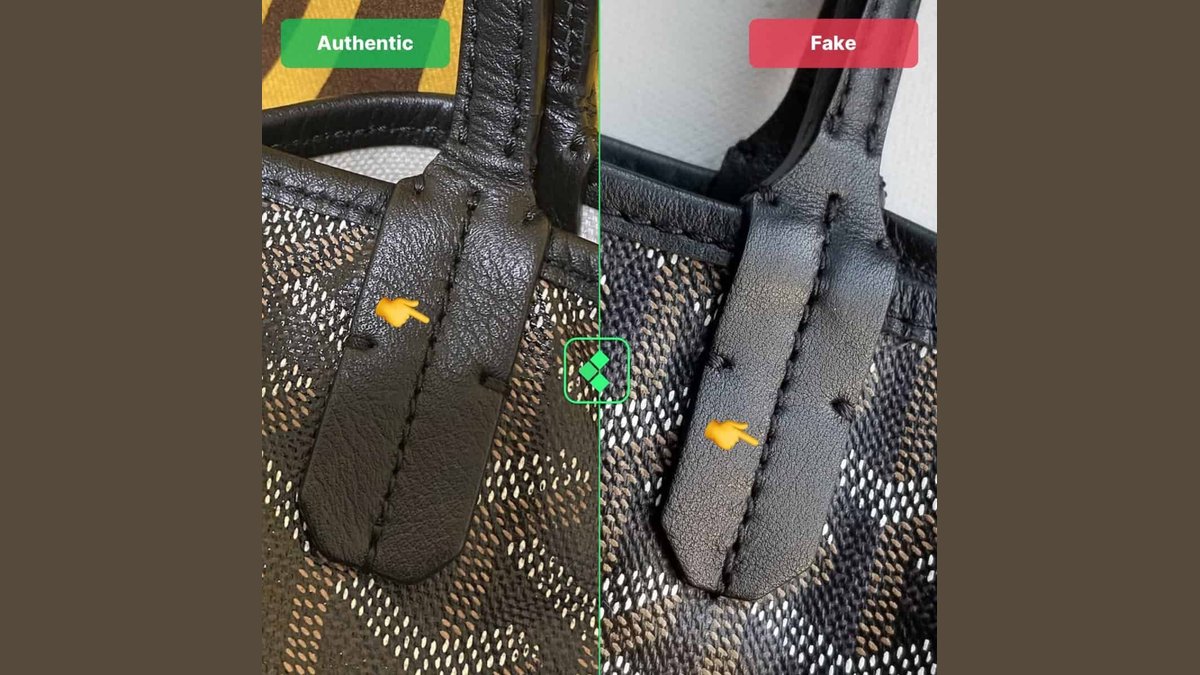
How Can You Tell If A Goyard Bag Is Real: 3 Expert Checks
Last Updated on October 21, 2026
How Can You Tell If A Goyard Bag Is Real? You must examine the hand-painted pattern, the quality of the canvas, and the specific hardware details. Verify these three core elements against the manufacturer’s official product care guidelines and inspect the bag under bright, natural light to spot inconsistencies.
Signs of an authentic bag
You can identify potential issues by looking for patterns that don’t match the standard production quality of the brand. This table helps you compare common features found on genuine versus counterfeit items.
| What you notice | What it usually means | What to do first |
|---|---|---|
| Paint feels raised | Likely authentic hand-painting | Check pattern alignment |
| Canvas feels plastic | Likely a fake | Compare to known models |
| Stitching is uneven | Likely a fake | Look for loose threads |
| Leather edges fray | Poor construction quality | Inspect the handle base |
| Hardware is lightweight | Common in replicas | Feel the metal weight |
| Serial number missing | Could be a fake | Check inside the pocket |
| Dust bag is thin | Often a cheap imitation | Examine the logo print |
The hand-painted pattern quality
Authentic Goyard canvas features a distinct “chevron” pattern that’s hand-painted in layers, giving it a unique, slightly raised texture. If you run your fingers across the pattern, you should feel a subtle variation in the paint thickness. On many counterfeit bags, the design is printed flat by a machine, which creates a perfectly uniform, smooth surface that lacks depth. To confirm this, look closely at the overlapping areas of the chevron shapes. Genuine bags show deliberate, hand-applied strokes where the colors meet. If the lines look pixelated or perfectly identical across every single inch of the bag, it’s almost certainly a mass-produced imitation. The paint should never appear cracked or peeling on a new item, as the brand uses high-quality pigments designed for durability.
Quality of the interior lining
The interior of a genuine bag is typically lined with a durable, high-quality cotton twill that feels sturdy to the touch. You should check the seams inside the bag, as they must be perfectly straight and reinforced with tight, even stitching. A common mistake people make is focusing only on the exterior while ignoring the interior, which leads them to miss poorly finished pockets or fraying fabric edges that cost them a significant amount of money. If the lining feels like thin, cheap polyester or if the stitching is erratic with visible knots, the bag is likely not genuine. Always check the stitching tension; if you can pull the threads apart with your fingers, it’s a clear sign of low-grade manufacturing that doesn’t meet the brand’s standards.
Hardware and leather construction
Genuine hardware is made from solid, high-quality metals that feel heavy and substantial in your hand. The clasps and zippers should operate smoothly without sticking or grinding, and any engravings on the metal must be crisp, deep, and perfectly centered. If you notice the metal is flaking or feels like lightweight plastic, you’re likely looking at a replica. The leather trims should be supple, not stiff or sticky, and they should smell like natural leather rather than harsh chemicals. One trade-off to consider is that older, well-used authentic bags may show natural patina, but the structure should remain firm. If the bag collapses completely when empty or the leather feels oily, it’s likely a poor-quality imitation.
When to stop and get help
- Stop if the serial number is missing or appears scratched off, as this often indicates a stolen item.
- Stop if you lack the specific model knowledge, as this varies by model — check the label for the correct dimensions.
- Stop if the seller refuses to provide clear, high-resolution photos of the interior stamps and hardware.
- Stop if the price is significantly lower than the current market value, as luxury goods rarely sell at deep discounts. Contact a professional luxury authenticator if you’re still unsure, as they have the expertise to verify items.
How can you tell if a Goyard bag is real by the smell?
Authentic bags have a subtle, natural scent of high-quality leather and canvas, whereas fakes often smell strongly of cheap glue or synthetic chemicals. If the bag has an overpowering plastic smell, it’s a major red flag.
Is it safe to buy from a private seller?
It’s only safe if you use a secure payment method that offers buyer protection or if you have the item verified by a third-party authentication service. Never send money via direct bank transfer to a stranger.
What happens if the stitching is irregular?
Irregular or loose stitching usually means the bag is a low-quality replica. Genuine items undergo strict quality control, so every stitch should be perfectly aligned and uniform across the entire construction of the bag.
Does the pattern always line up perfectly?
The chevron pattern is designed to be consistent, but small variations can occur due to the hand-painting process. However, the overall alignment should look purposeful and balanced rather than messy or misaligned at the seams.
How long does the canvas last?
With proper care, the canvas can last for many years or more. If the canvas shows significant signs of wear or cracking after only a few months of use, it’s likely a counterfeit product.
Is it safe to rely on a serial number?
A serial number is a good starting point, but it isn’t the only factor. You must verify the number against the specific model’s production history, as counterfeiters often copy valid serial numbers onto fake bags.
You should always prioritize inspecting the tactile details, such as the texture of the canvas and the weight of the hardware, to ensure you’re getting an authentic product. Relying on multiple verification points rather than just one feature will give you the most accurate assessment of the bag’s true origin.
Related guides