
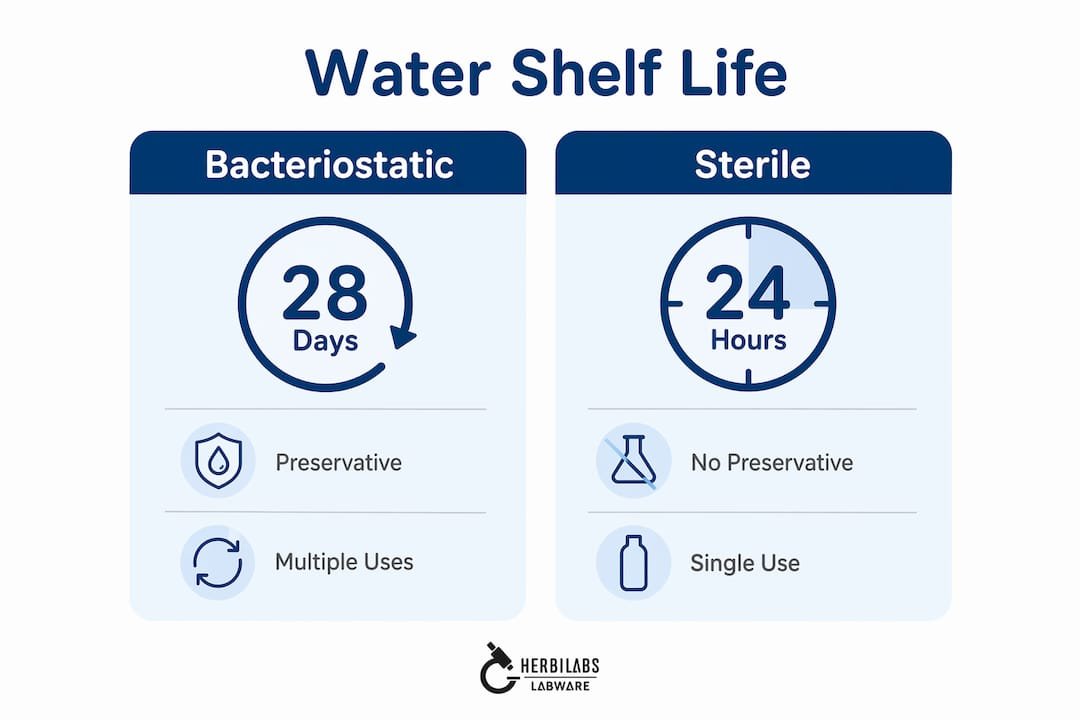
How Long Does Bac Water Last in Fridge: The 28-Day Rule
Last Updated on October 24, 2026
Bacteriostatic water is safe to use for up to 28 days after the first puncture of the vial when stored in a refrigerator. How long does Bac water last in fridge conditions depends entirely on maintaining a sterile environment; once the 28-day window passes, the risk of contamination increases significantly.
How long water lasts in the fridge
| How you use it | How often | What tells you it’s due |
|---|---|---|
| Daily injections | Every day | Date written on vial |
| Weekly injections | Once weekly | Four weeks passed |
| Monthly use | Once monthly | First puncture date |
| Occasional use | Rarely | Vial is empty |
| Shared vials | Never | Risk of contamination |
Risks of using expired water
Using bacteriostatic water past the 28-day limit significantly increases the risk of bacterial growth within the solution. While the added benzyl alcohol acts as a preservative to inhibit microbial proliferation, it isn’t a sterilizing agent that lasts indefinitely. After the first needle puncture, the seal is compromised, allowing airborne particles or skin bacteria to enter the vial.
In the first few days, the risk is minimal if you follow aseptic techniques. Over several weeks, the preservative strength slowly degrades. If you continue to use the vial beyond the recommended four-week period, you expose yourself to potential infections at the injection site. Always check the FoodSafety.gov cold food storage charts to understand how temperature affects shelf life for sterile medical supplies. If you notice any cloudiness, particles, or discoloration, discard the vial immediately regardless of how much time has passed.
Signs the vial is unsafe
Visible particles floating inside the clear liquid indicate potential contamination or degradation. If you see debris, discard the vial immediately.
Cloudy or milky appearances suggest a compromised chemical structure. The solution must remain crystal clear at all times.
Discoloration or yellowing often signals oxidation. If the liquid shifts from its baseline hue, don’t inject it.
Each extra hole provides a new path for contaminants.
A broken or damaged seal on the vial cap means the sterility is void. If the seal is loose, assume the contents are unsafe.
Expiration dates on the original packaging are hard limits. Using expired medication risks reduced potency or toxic breakdown.
Proper handling and preparation
Each time you access the vial, it takes only a few minutes to ensure safety. You must wash your hands thoroughly and wipe the rubber stopper with a sterile alcohol pad before every use. Never touch the needle to any surface after removing the cap. The cost of this process is minimal, requiring only basic supplies like alcohol swabs and fresh, sterile needles. Always discard the needle after a single use, as reusing them introduces bacteria directly into the source vial. Check your specific manufacturer’s insert for any unique storage requirements.
Habits for longer shelf life
- Label the vial with the exact date of the first puncture.
- Store the vial upright in the refrigerator to keep the stopper dry.
- Use a fresh, sterile needle every time you draw liquid.
- Keep the vial in its original box to protect it from light.
- Limit the number of times you pierce the rubber stopper.
Can I freeze bacteriostatic water?
No, you should never freeze bacteriostatic water because the process can damage the vial’s integrity and change the chemical balance of the solution. Keep it in the main body of your refrigerator at a consistent temperature between 36°F and 46°F.
Is it safe to use after 30 days?
No, you should discard the vial after 28 days because the manufacturer’s sterility guarantee ends at that point. Using it longer increases the chance of introducing pathogens into your body, which could lead to an infection at the injection site.
Does the fridge temperature matter?
Yes, the temperature must stay between 36°F and 46°F to keep the preservative effective. If your refrigerator fluctuates above this range, the bacteriostatic properties may fail faster, and you should consider the vial unsafe for further use.
What if I drop the vial?
You should discard the vial if it hits the floor or any non-sterile surface. Even if the glass doesn’t break, the risk of contamination entering through the stopper or microscopic cracks is too high to justify the risk of injection.
Can I store it in the freezer door?
No, you must avoid the refrigerator door because the temperature changes every time you open the fridge. Rapid temperature shifts can cause the rubber stopper to expand or contract, potentially breaking the airtight seal of the vial.
Does the vial need a cover?
Yes, keeping the vial in its original box is best to protect it from light and accidental damage. If you lost the box, store it in a clean, sealable plastic bag to prevent dust and debris from settling on the rubber stopper.
Why do I need to wipe the stopper?
You must wipe the stopper with alcohol to kill surface bacteria before inserting your needle. If you skip this step, you drag skin bacteria or dust directly into the sterile solution, turning the entire vial into a breeding ground for germs.
Start by marking your calendar or writing the date on the bottle the moment you first open it. If you see any changes in the appearance of the water, stop using it immediately. If you develop redness or swelling after an injection, contact a healthcare professional for guidance.