
How Much Bac Water for 20mg Retatrutide: Simple Mixing Guide
Last Updated on October 4, 2026
To determine how much bac water for 20mg Retatrutide, use 2ml of bacteriostatic water to reconstitute the vial for a concentration of 10mg per ml, which provides easy dosing math. This assumes you prefer a standard concentration; if you need a different strength, adjust the volume accordingly.
Calculating water for your retatrutide dose
- Always use bacteriostatic water with 0.9% benzyl alcohol to prevent bacterial growth.
- Check the vial label for the exact milligram amount before you begin measuring.
- Clean the rubber stopper with a fresh alcohol wipe before inserting any needle.
- Draw the exact volume of liquid needed into a sterile insulin syringe first.
- Inject the liquid slowly against the side of the glass vial to avoid foaming.
- Store the reconstituted vial in a refrigerator between 2°C and 8°C at all times.
Why concentration ratios matter
The primary goal of reconstitution is achieving a concentration that makes your daily or weekly dose easy to measure. Using 2ml of bacteriostatic water for a 20mg vial creates a 1:10 ratio, meaning every 0.1ml of the solution contains exactly 1mg of the peptide. This ratio is beneficial because it eliminates complex conversions when you’re drawing your dose into a standard 1ml insulin syringe. If you choose a different volume, such as 1ml of water, your concentration becomes 20mg per ml, which makes individual units represent a larger amount of the compound. Using a consistent method ensures that every dose remains stable and accurate throughout the life of the vial, preventing the errors that occur when shifting between different dilution ratios.
Adjusting for different dose needs
| Situation | What changes | What to do instead |
|---|---|---|
| High concentration | Less water used | Use 1ml for 20mg/ml |
| Low concentration | More water used | Use 4ml for 5mg/ml |
| Small syringe | Limited capacity | Use 1ml for 20mg/ml |
| Large dose | Volume per draw | Use 4ml for 5mg/ml |
| Storage space | Vial volume | Use 1ml for 20mg/ml |
How to prepare your solution
- Wash your hands thoroughly with soap and water to ensure the workspace remains sterile during the entire process.
- Wipe the rubber top of the 20mg Retatrutide vial using a new 70% isopropyl alcohol pad for fifteen seconds.
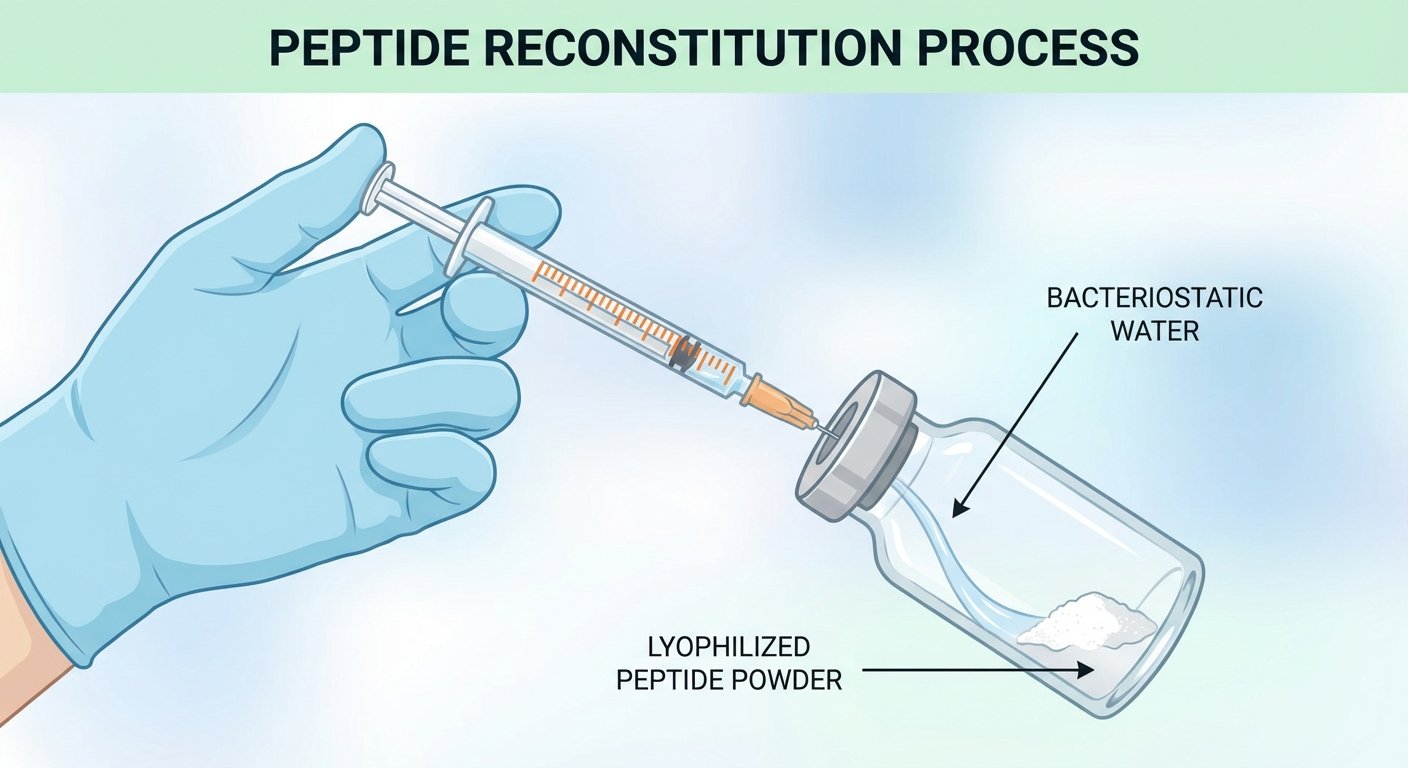
- Draw 2ml of bacteriostatic water into a sterile syringe by pulling the plunger back to the 2ml mark exactly.
- Insert the needle into the vial and push the plunger down slowly to let the water touch the glass.
- Roll the vial gently between your palms to mix the contents; never shake the vial, as this damages peptides.
- Check that the liquid is clear and free of particles before you draw your first dose for the day.
The mistakes that ruin it
- Shaking the vial vigorously can cause the peptide to denature or aggregate, reducing its effectiveness.
- Using regular sterile water instead of bacteriostatic water allows bacteria to grow in the vial within days.
- Touching the needle tip to any surface introduces contaminants that can cause infections during your subsequent uses.
Is it safe to store this in the freezer?
No, you should never freeze reconstituted peptides because the expansion of water during freezing can shatter the glass vial. Keep your vial in the main section of your refrigerator, but avoid the door where temperatures fluctuate when you open it.
How do I know if the peptide is still good?
The solution must remain clear and free of cloudy sediment or floating particles at all times. If you notice any change in color or clarity, discard the vial immediately as these signs indicate that the chemical structure has started to break down.
Can I mix different peptides in one syringe?
No, you should never mix different compounds in the same syringe unless a professional has explicitly instructed you to do so. Combining substances can lead to unpredictable chemical reactions or changes in the potency of each individual ingredient.
What happens if I use too much water?
Using too much water simply results in a lower concentration, meaning you must draw a larger volume to get the same dose. This isn’t inherently dangerous, but it may exceed the volume capacity of your syringe or the available space in the vial.
Does the needle gauge matter for drawing?
Yes, using a fine-gauge needle like a 30G or 31G is best for accuracy when drawing small amounts. A thicker needle may cause the rubber stopper to core, which leaves small pieces of rubber floating inside your solution and contaminates the vial.
How long does a 20mg vial last?
The lifespan of your vial depends entirely on the size of your dose and how often you use it. Check your prescribed dose frequency to calculate how many total doses are in the vial, and always note the date of reconstitution on the label.
Proper preparation ensures that you receive the correct amount of your medication every time. Always verify your measurements twice before drawing, and keep your supplies in a cool, dark place to maintain stability for the duration of the vial’s use.