
How Much Bac Water For 5Mg Retatrutide: The Correct Ratio
Last Updated on October 5, 2026
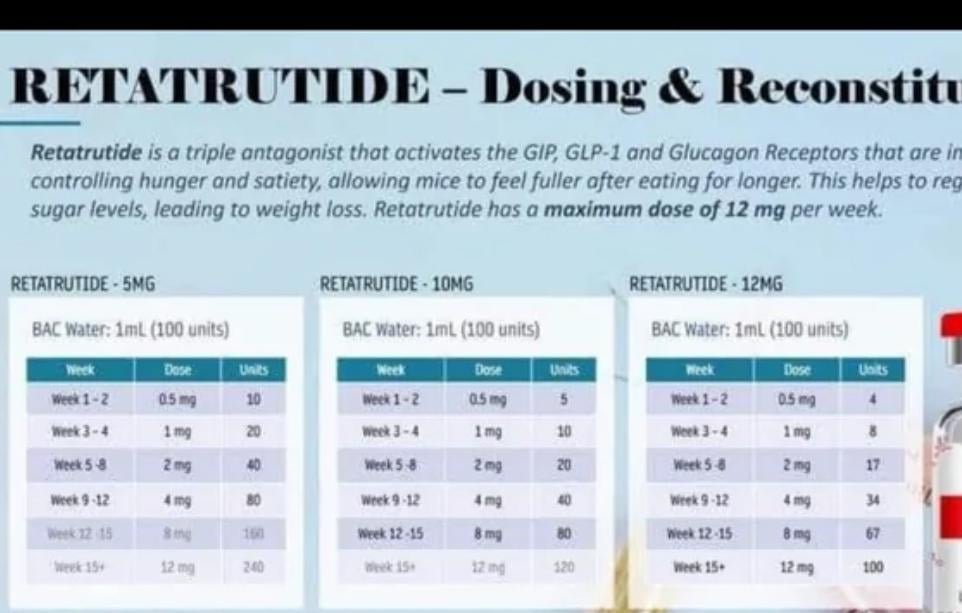
You should add 1.0 mL of bacteriostatic water to a 5 mg vial of Retatrutide for a concentration of 0.5 mg per 0.1 mL. How Much Bac Water For 5Mg Retatrutide is a question of your desired dose volume, as the total amount of solvent determines the concentration.
How much water for your retatrutide vial
- Use only sterile bacteriostatic water containing 0.9% benzyl alcohol as a preservative.
- Always wipe the rubber stopper with a 70% isopropyl alcohol swab before inserting any needle.
- Inject the chosen amount of water slowly down the side of the glass vial.
- Gently swirl the vial to dissolve the powder; never shake it vigorously.
- Store the reconstituted vial in a refrigerator between 36°F and 46°F.
- Check the vial for any floating particles or cloudiness before each use.
Why precision matters in reconstitution
Reconstitution is the process of returning a lyophilized, or freeze-dried, powder into a liquid state for use. The primary goal is to maintain the chemical stability of the peptide while creating a solution that allows for accurate dosing. When you introduce bacteriostatic water, you’re adding a solvent that contains a preservative, which prevents bacterial growth over the life of the vial.
If you add too much water, you increase the volume of the injection, which may cause discomfort. If you add too little, the concentration becomes so high that measuring a tiny fraction of a milliliter becomes difficult and prone to human error. This balance is critical because the potency of the peptide depends on the exact ratio of the powder to the liquid.
Adjusting for your specific dose
| Goal | Amount of Water | Resulting Concentration |
|---|---|---|
| Standard dilution | 1.0 mL | 0.5 mg per 0.1 mL |
| More concentrated | 0.5 mL | 1.0 mg per 0.1 mL |
| Easier measurement | 2.0 mL | 0.25 mg per 0.1 mL |
| High volume | 2.5 mL | 0.2 mg per 0.1 mL |
Choose the standard 1.0 mL dilution if you’re unsure, as this provides the most balanced margin for error. If you struggle with tiny visual increments, opt for the 2.0 mL dilution to make the markings on your syringe easier to read.
Avoid the 0.5 mL concentration unless you have a steady hand and a high-precision syringe. Even a minor miscalculation here doubles the intended dose, which creates a significant risk of toxicity.
If your goal is to minimize the physical volume of the liquid injected, use the 0.5 mL setting. However, if you find the patient frequently spits out the medication, use the 2.5 mL high-volume option. This allows you to administer the dose in smaller, more manageable increments over a longer period.
Steps to mix the vial properly
- Wash your hands thoroughly with soap and water to ensure you don’t introduce contaminants to the vial stopper.
- Draw the chosen amount of bacteriostatic water into a clean, sterile syringe, ensuring there are no air bubbles in the barrel.
- Clean the top of the Retatrutide vial with a fresh alcohol pad and let it air dry for 30 seconds.
- Insert the needle into the vial at a 45-degree angle and slowly push the plunger to release the water.
- Remove the syringe and gently rotate the vial between your palms until the powder is fully dissolved and clear.
- Verify there are no clumps or particles remaining; if the liquid is clear, the reconstitution was successful and safe.
Mistakes that ruin the peptide
- Shaking the vial vigorously can cause denaturation or aggregation of the peptide, which may render the dose ineffective.
- Using non-sterile water or tap water introduces bacteria that can cause severe infections at the injection site.
- Leaving the vial in direct sunlight or at room temperature for extended periods degrades the structure of the medication.
- Touching the needle tip to any surface before injection risks contamination, which can lead to localized inflammation or abscesses.
Frequently asked questions
Does the amount of water change the total dose?
No, the total amount of medication remains 5 mg regardless of how much water you add to the vial. The water only changes the concentration of the liquid, which dictates how much volume you need to draw for a specific dose.
Can I use sterile water instead of bacteriostatic water?
No, sterile water lacks the benzyl alcohol preservative found in bacteriostatic water. Without this preservative, the solution must be used immediately, as it will support bacterial growth within hours of being mixed.
Is it safe to store the vial in the freezer?
No, freezing can damage the stability of the peptide and may cause the glass vial to crack. You should always keep the reconstituted solution in the main compartment of your refrigerator, away from the freezer section.
How long does the mixed vial stay good?
The viability of the solution depends on the specific manufacturer’s storage guidelines, but most reconstituted peptides remain stable for 28 days when refrigerated. Always check the label on your specific vial for the exact expiration window.
What happens if I see particles after mixing?
If the liquid remains cloudy or contains visible particles after gentle swirling, the peptide may be degraded. Don’t use the vial if the contents don’t turn into a completely clear, transparent solution after proper mixing.
Does the injection site matter for effectiveness?
The location of the injection doesn’t change the systemic effectiveness of the medication. However, if you experience irritation, choose a different site for your next dose to allow the skin to heal properly.
Bac Water, in short
This guide provides general information for handling laboratory peptides. Always consult your healthcare provider for medical advice regarding your personal health, dosing requirements, or any symptoms you experience. If you notice signs of infection such as redness, swelling, or heat at an injection site, contact a medical professional immediately.
Related guides