
How Long Is Bac Water Good For In Fridge: 28 Day Safety Guide
Last Updated on October 2, 2026
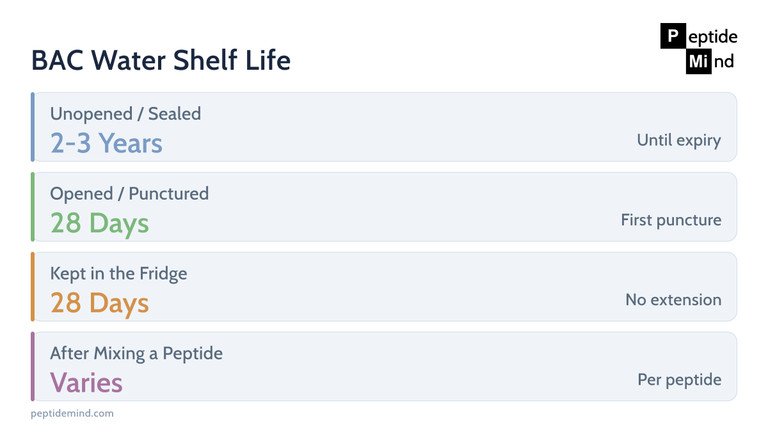
Bacteriostatic water is typically safe to use for 28 days after the first puncture of the vial, assuming it’s stored in a cool, dark place. How long is bac water good for in fridge is a question of sterility; if the seal is compromised, the liquid can become contaminated.
Keeping your water in the fridge
| How you use it | How often | What tells you it’s due |
|---|---|---|
| Daily injections | Monthly | Vial is empty |
Risks of using expired solutions
The primary risk of using bacteriostatic water past its 28-day limit is the growth of microorganisms. Once the rubber stopper is pierced, the sterility of the vial is no longer guaranteed due to the risk of introducing contaminants with each puncture. If you use the water after this period, you risk injecting contaminated material into your body, which can lead to localized infections or systemic reactions.
After 28 days, the chemical balance of the solution may also shift. The manufacturer’s guidelines, which you can verify by checking the FDA’s guidance on sterile drug products, emphasize that multi-dose vials have a limited shelf life once opened. If you continue using the same vial for several months, you increase the chance of the rubber stopper failing to seal properly, allowing air and contaminants to enter. This isn’t a matter of the water “going bad” in a traditional sense, but of the preservative failing to keep the environment sterile.
Signs your solution is no longer safe
- Cloudiness: The liquid should remain perfectly clear; any haze suggests contamination.
- Visible particles: Floating debris indicates that the seal has failed or the vial was compromised.
- Discoloration: A yellow or brown tint means the chemical makeup has changed.
- Seal damage: A loose or cracked rubber stopper allows bacteria to enter the vial.
- Expired date: If the printed expiration date on the packaging has passed, don’t use it.
- Unknown history: If you can’t remember when you first punctured the vial, discard it.
Steps for proper handling
Each time you draw from a multi-dose vial, you must follow strict sanitary protocols to maintain the integrity of the contents. First, wash your hands thoroughly with soap and water for 20 seconds. Clean the rubber stopper with a new alcohol swab before every single insertion of the needle. Never touch the stopper with your fingers, and ensure you use a sterile, single-use needle for every draw. This process takes about two minutes and requires only basic supplies like alcohol pads and sterile syringes. If you’re unsure if a vial is still sterile, it’s always safer to discard it rather than risk an injection. Always check the manufacturer’s insert for specific handling instructions unique to your brand.
Habits to extend your supply
- Label the vial: Write the date of the first puncture on the bottle immediately.
- Store correctly: Keep the vial in a cool, dark environment to prevent chemical breakdown.
- Use clean needles: Only use a fresh, sterile needle for every single draw from the vial.
- Minimize exposure: Don’t leave the vial out on a counter longer than necessary.
Frequently asked questions
Can I use bac water after 30 days?
No, you should discard the vial after 28 days because the preservative effectiveness decreases significantly. Using it beyond this window risks bacterial contamination, which can lead to serious health complications if the solution is injected into your body.
Is it safe to keep in the freezer?
No, you shouldn’t freeze bacteriostatic water because the extreme cold can damage the rubber stopper or cause the glass vial to crack. Freezing can also change the chemical stability of the preservative, making the solution unreliable for future medical use.
Does it need to be refrigerated?
No, it doesn’t strictly require refrigeration, but keeping it in a cool, dark place is ideal for longevity. Room temperature storage is acceptable as long as the area is clean and the vial is protected from direct sunlight and heat sources.
What happens if I use expired water?
You risk injecting bacteria or fungi into your system, which can cause an infection at the injection site. Because the vial is no longer sterile, any germs introduced during a previous draw may have contaminated the solution.
How long does a 30ml vial last?
A 30ml vial lasts for 28 days once opened, regardless of how much liquid is left inside. The 28-day rule is based on the risk of contamination from repeated punctures, not the volume of the liquid remaining in the bottle.
Does the brand of water matter?
Yes, you should always follow the specific storage instructions provided by the manufacturer on the box or insert. While the 28-day rule is a standard for multi-dose vials, some brands may have specific requirements regarding temperature or light sensitivity.
Bac Water, in short
Check your vial’s rubber stopper for any signs of wear or debris before you draw any liquid. If you notice any floating particles or a change in the clarity of the water, discard the entire vial immediately. If you have concerns about an injection site, contact your healthcare provider.
Related guides